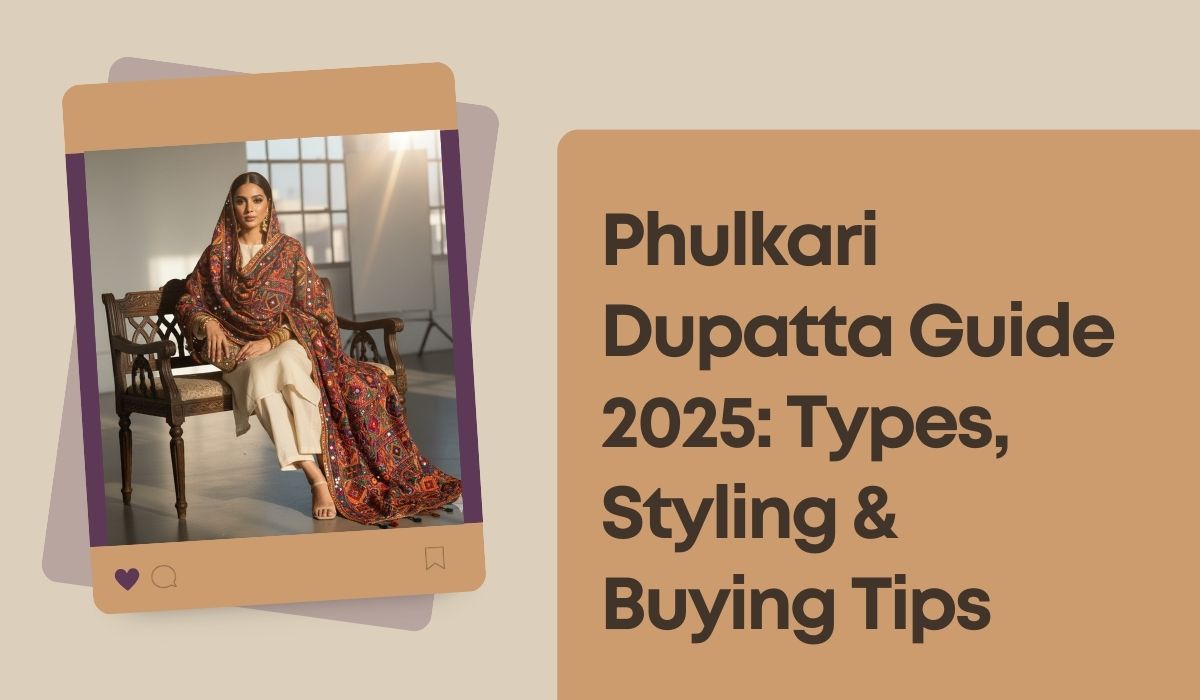
A Phulkari Dupatta isn’t just an accessory — it’s emotion, heritage, craft, and storytelling woven into fabric. From Punjabi brides to modern fashion influencers, this hand-embroidered masterpiece continues to define elegance. The vibrant threadwork, geometric motifs, and cultural symbolism make every Phulkari a wearable piece of art.
As trends come and go, Phulkari dupattas remain evergreen because they blend tradition with modern versatility like no other fashion piece.
Key Takeaways
- Phulkari dupatta is a heritage Punjabi embroidery style made with hand-done floss threadwork.
- It suits weddings, festive wear, college wear, and even Indo-western styling.
- Lightweight varieties like Chiffon and Georgette Phulkari are perfect for daily wear.
- Heavier Bagh Phulkari pieces are perfect for brides and special occasions.
- Buying authentic hand-embroidered Phulkari ensures longevity, depth, and cultural value.
What Makes a Phulkari Dupatta So Special?
Phulkari literally means “flower work”, and its beauty lies in the detailed hand embroidery using floss silk thread (pat). What makes it iconic?
- Every stitch is done manually.
- Colors are loud, joyful, and culturally symbolic.
- Designs represent blessings, prosperity, and family heritage.
- Each region of Punjab adds its own twist to the embroidery.
Phulkari has evolved from bridal trousseaus to global runways — yet the essence remains beautifully rooted.
How Many Types of Phulkari Dupattas Are There?
Phulkari isn’t one style — it’s a universe. Here are the most popular types:
- Bagh Phulkari – Fully covered embroidery from edge to edge
- Chope Phulkari – Bridal style gifted by maternal grandparents
- Tilpatra Phulkari – Dotted, subtle Phulkari perfect for minimalists
- Sainchi Phulkari – Features human motifs and daily-life scenes
- Modern Machine Phulkari – Affordable, lighter, trend-based
Each type serves a different fashion need — from ultra-traditional to wearable fusion.
Is Phulkari Dupatta Suitable for Daily Wear?
Absolutely! Today’s lightweight Phulkari dupattas allow easy styling for:
- College outfits (Kurti + Jeans + Light Phulkari)
- Office wear (Solid suits + Minimal Phulkari)
- Brunch look (Indo-western tunic + Modern Phulkari)
- Festive casuals (Chanderi/Georgette + Soft threadwork)
Choose Georgette or Chiffon for daily wear, and Silk or Khaddar for festive events.
How to Style a Phulkari Dupatta in 2025?
Here are fresh, modern styling ideas loved by fashion creators:
1. Classic Punjabi Look (Trending on Reels)
- Patiala Suit
- Juttis
- Gold Jhumke
- Center-pinned heavy Phulkari
2. Indo-Western Fusion
- White shirt + Flared jeans + Long Phulkari
- Belted Phulkari cape look
- Phulkari over crop top & skirt
3. Bridal or Festive Glam
- Velvet suit + Bagh Phulkari
- Silk Anarkali + Heavy Chope Phulkari
4. Minimal Everyday Wear
- Solid cotton kurti + Light embroidery dupatta
What Fabrics Are Best for Phulkari Dupattas?
Phulkari embroidery is mainly done on:
Why Is Hand-Embroidered Phulkari More Valuable Than Machine-made?
Hand embroidery takes weeks or months — every stitch is intentional and holds emotional, cultural meaning. Machine-made pieces may be cheaper but lack:
- Depth
- Texture
- Authenticity
- Storytelling
- Longevity
Handmade Phulkari = Heritage + Investment + Emotion.
Quote
“A Phulkari is not stitched with thread — it’s stitched with blessings.”
Hand Phulkari vs Machine Phulkari
| Feature | Hand-Embroidered Phulkari | Machine-Embroidered Phulkari |
|---|---|---|
| Craftsmanship | Done by artisans; highly detailed | Fast production; less depth |
| Price | Premium | Budget-friendly |
| Durability | High (stitches tightly packed) | Moderate |
| Cultural Value | Extremely high | Low |
| Ideal For | Weddings, heirloom, gifting | Daily casuals, college wear |
How to Identify an Authentic Phulkari Dupatta in 2025?
With machine embroidery dominating the market, identifying a genuine Phulkari dupatta is essential. Authentic Phulkari pieces are made using pat silk thread, where the embroidery is thick, raised, and slightly glossy. Another key indicator is irregularity—handmade stitches never look machine-perfect, which actually adds to their charm. When you flip the dupatta, the backside of a hand-embroidered Phulkari will show thread overlaps, unlike the neat finish of machine-made designs.
If you’re buying a Phulkari for weddings, gifting, or heirloom purposes, always choose artisan-made or handloom-certified pieces.
Why Are Phulkari Dupattas Gaining Popularity Among Gen-Z and Millennials?
Younger generations are rediscovering Phulkari dupattas because they check all boxes: aesthetic, ethical, sustainable, and Instagram-worthy. Influencers often pair Phulkari with denim, co-ord sets, and Indo-western silhouettes, making this heritage art form more accessible and modern. The bright color palette also stands out beautifully on social media reels and outdoor shoots.
For Gen-Z, a Phulkari dupatta is not just cultural—it’s a bold fashion statement that celebrates roots while staying trendy.
What Are the Common Problems People Face With Phulkari Dupattas?
Even premium Phulkari dupattas require care. Here are common issues and easy fixes:
- Color bleeding
– Always dry-clean first; avoid harsh detergents. - Loose threads
– Don’t pull; trim carefully and reseal using transparent fabric glue. - Heaviness
– Choose chiffon or georgette bases instead of khaddar for daily use. - Storage wrinkles
– Wrap in muslin cloth; avoid direct folds on embroidery patches. - Faded shine
– Occasional steaming (not ironing directly) helps restore thread brightness.
A premium Phulkari will last years if stored and cleaned properly.
Best Suit & Jewelry Combinations to Wear With Phulkari Dupatta
To create a cohesive, elegant outfit, balance the heavy work of Phulkari with simple clothing. Solid-colored suits—like ivory, black, mustard, emerald, or rose pink—work best. For jewelry, opt for jhumkas, chandbalis, bangles, or a simple kundan choker depending on the occasion.
Phulkari is naturally vibrant, so pairing it with subtle suits ensures the dupatta stands out as the hero piece. This formula works beautifully for weddings, family functions, festive gatherings, and even casual brunch dates.
How to Pair Phulkari Dupatta With Modern Accessories?
To make Phulkari dupattas versatile for 2025 fashion trends, pairing them with contemporary accessories works wonders. Try belted Phulkari over a plain kurta for a structured look or layer it as a cape over dresses and co-ord sets. Minimalist jewelry like thin gold chains, stud earrings, or delicate bracelets complement light Phulkari, while heavier embroidered pieces pair beautifully with traditional jhumkas, bangles, and statement rings. The key is balance: let the dupatta remain the focal point.
Phulkari Dupatta as a Gift: Why It’s Meaningful
Giving a Phulkari dupatta as a gift conveys more than style—it symbolizes love, blessings, and cultural pride. Brides often receive Chope or Bagh Phulkari from elders as part of a traditional gift, while modern versions make elegant gifts for friends or family celebrating festivals, birthdays, or weddings. Handcrafted Phulkari dupattas are timeless keepsakes that carry emotional and artistic value for years, making them an ideal choice for meaningful gifting.
Tips to Maintain and Store Your Phulkari Dupatta
Proper care ensures your Phulkari remains vibrant and durable. Always store in a muslin or cotton cloth, away from direct sunlight, moisture, or folding the embroidered areas. For cleaning, dry-clean heavily embroidered dupattas and gently hand wash lighter ones with mild detergent. Occasionally, steam lightly to remove wrinkles without ironing directly on threads. By following these simple steps, your Phulkari dupatta can retain its colors and craftsmanship for decades.
FAQs
1. What is a Phulkari dupatta?
A hand-embroidered Punjabi dupatta with colorful floral threadwork.
2. Which fabrics are best for Phulkari?
Khaddar, silk, chiffon, georgette, and velvet are popular choices.
3. Is Phulkari suitable for daily wear?
Yes, lightweight Phulkari on chiffon or georgette is ideal for casual outfits.
4. How to clean a Phulkari dupatta?
Dry-clean heavy embroidery; hand wash light pieces and avoid direct sunlight.
5. Which color is best for weddings?
Red, maroon, mustard, rust, and magenta are classic bridal choices.
Conclusion
A Phulkari dupatta is more than just a piece of fabric—it is a celebration of culture, heritage, and timeless artistry. Whether worn for weddings, festive occasions, or everyday fashion, it adds vibrance, elegance, and personality to any outfit. From traditional Bagh Phulkari to modern, lightweight styles, there’s a Phulkari for every taste and occasion.
Investing in an authentic hand-embroidered Phulkari not only supports artisans but also ensures that you own a piece of heritage that can be cherished for generations. Embrace the colors, patterns, and stories woven into every stitch, and let your Phulkari dupatta become the centerpiece of your wardrobe.
Explore more exquisite ethnic wear and curated Phulkari dupattas at Dhawan Suits and elevate your style effortlessly!